A restaurant is not only judged by its food. Before guests place an order, they already start forming an opinion from the seating layout, table spacing, chair comfort, booth design, lighting and overall dining atmosphere.
For restaurant owners, seating layout is not a small design detail. It directly affects guest comfort, service efficiency, seating capacity, brand image and long-term commercial performance. A good layout helps the space feel organized and welcoming. A poor layout can make even a beautiful restaurant feel crowded, uncomfortable or difficult to operate.
That is why restaurant furniture should never be selected as separate pieces. Booth seating, dining tables, chairs and circulation space need to work together as one complete restaurant seating strategy.
Why Restaurant Seating Layout Matters More Than Many Owners Think
Many restaurant projects start with a simple question: how many seats can we fit into the space?
That question is important, but it is not enough.
A strong restaurant seating layout should balance capacity with comfort. If tables are placed too closely, guests may feel pressured and staff may struggle to move smoothly. If the space is too loose, the restaurant may look empty and lose valuable revenue potential.
The best layout considers several things at the same time: guest privacy, table turnover, service flow, walkway width, furniture durability and visual atmosphere. When these details are planned properly, the restaurant becomes easier to manage and more enjoyable for customers.
For commercial dining spaces, layout is not only about appearance. It is part of the business model.
Booth Seating Creates Privacy, Structure and Better Space Use
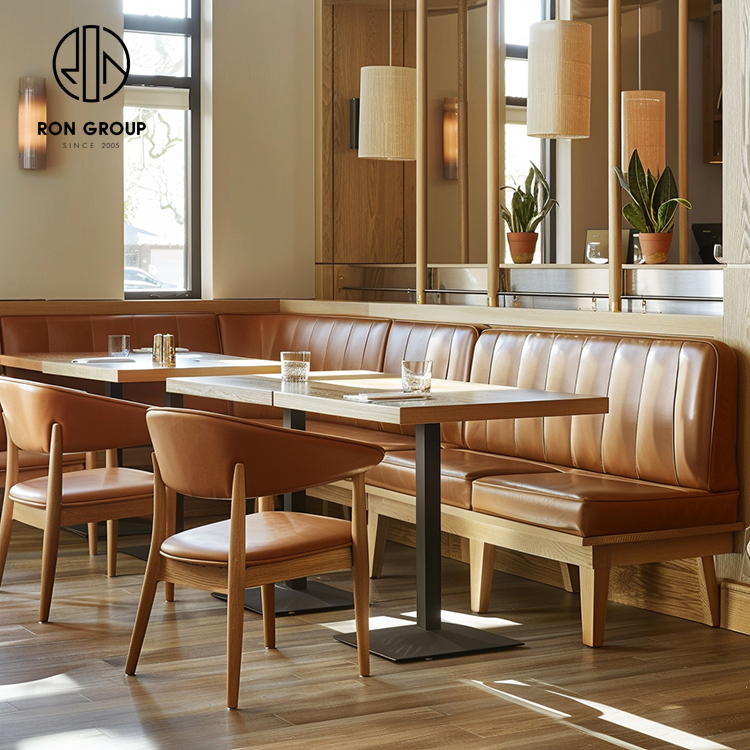
Restaurant booth seating is one of the most effective ways to improve both comfort and space organization. Compared with loose chairs only, booths can create more stable dining zones and make the layout feel more complete.
Wall-side banquette seating is especially useful in restaurants, cafés, steakhouses and hotel dining areas. It helps define the space, increases guest comfort and creates a stronger sense of privacy. For many guests, a booth seat feels more relaxed and premium than a standard chair.
From a business point of view, custom booth seating can also improve space efficiency. A well-planned booth layout can help restaurants use wall areas better, reduce wasted corners and create a cleaner visual rhythm.
In projects such as Volcano’s Steakhouse, booth seating and table arrangement were not treated as separate furniture choices. They were part of the full restaurant seating strategy, helping the space feel warm, organized and commercially practical.
Tables and Chairs Should Match the Dining Concept
Restaurant tables and chairs should not be chosen only because they look good in photos. They need to match the dining concept, service model and daily usage level.
For a steakhouse, solid wood tables, leather chairs and darker metal frames can create a stronger and warmer dining atmosphere. For a café, lighter materials and softer seating may feel more approachable. For a hotel restaurant, furniture often needs to balance comfort, elegance and long-term durability.
The key is consistency. Dining tables, chairs and booth seating should speak the same design language. If the table looks premium but the chairs feel weak, the whole space loses balance. If the booth seating is comfortable but the table size is wrong, the guest experience still suffers.
Good restaurant furniture is not about one beautiful item. It is about how every item works together in the space.
How Furniture Layout Supports Brand Identity
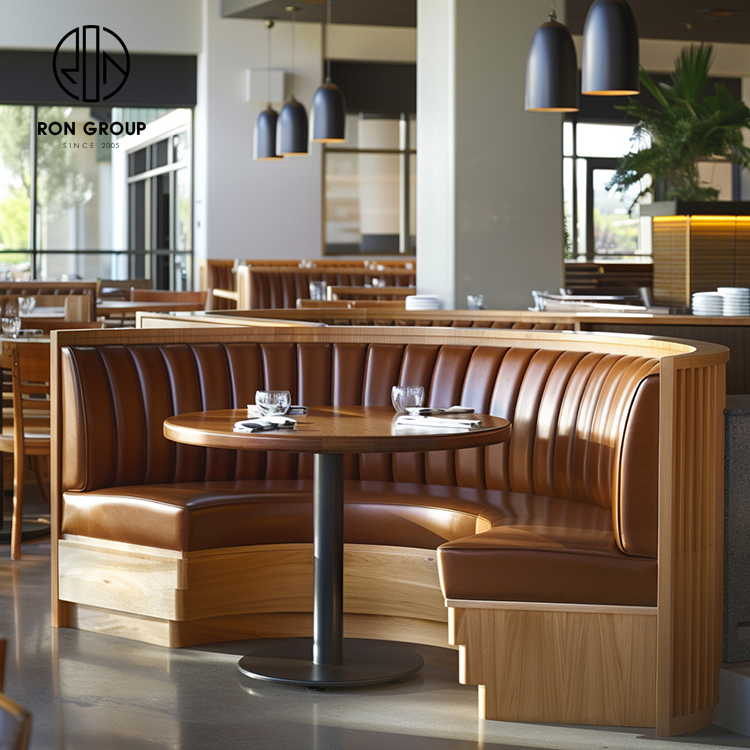
A restaurant’s brand is not only created by its logo or menu. It is also shaped by the way guests sit, move and experience the space.
A warm steakhouse needs furniture that feels solid and grounded. A modern café needs seating that feels casual but still refined. A fine dining restaurant needs more spacing, more comfort and better material coordination. A fast-casual restaurant may need a layout that supports faster turnover without making the space feel cheap.
This is where commercial restaurant furniture becomes a brand tool. The right booth height, table material, chair color and layout rhythm can make the restaurant easier to remember.
When the furniture matches the brand concept, guests do not just see a dining room. They feel the identity of the restaurant.
Common Restaurant Seating Mistakes to Avoid
One common mistake is placing too many tables into a space. More seats may look better on paper, but if guests feel crowded or staff cannot serve efficiently, the layout will create long-term problems.
Another mistake is choosing chairs only based on appearance. In a real restaurant, chairs need to be comfortable, stable, easy to clean and strong enough for daily commercial use.
A third mistake is mixing too many styles. Different furniture pieces can work together, but they must have a clear design direction. Random materials, colors and shapes can make the restaurant feel unfinished.
Restaurant owners should also avoid ignoring maintenance. Materials that look beautiful but are difficult to clean may not be suitable for high-traffic dining spaces. In commercial restaurants, durability and maintenance are not optional details. They affect operating cost over time.
A Better Restaurant Layout Starts With Complete Planning
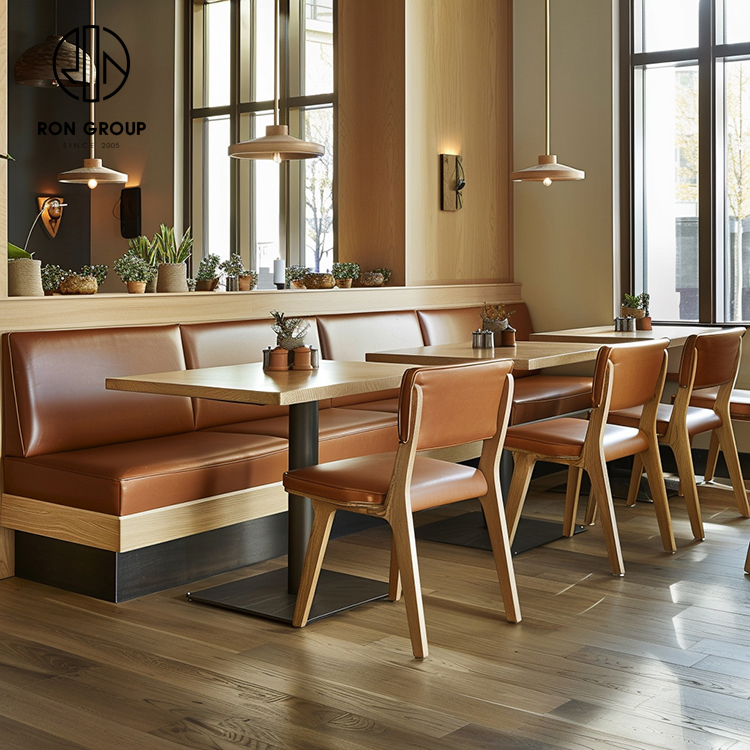
The best restaurant spaces are planned as a whole. Seating layout, booth seating, tables, chairs, lighting, wall finishes and tableware should support one clear dining experience.
When these elements are planned together, the restaurant becomes more comfortable for guests and more practical for operators. It also creates a stronger brand impression, which helps the restaurant stand out in a competitive market.
For restaurant owners, the real goal is not simply to buy furniture. The goal is to build a dining space that looks good, works well and continues to perform after opening day.
A smart seating layout can improve comfort. The right booth seating can improve privacy and capacity. Well-matched tables and chairs can strengthen the restaurant’s identity. Together, they turn restaurant furniture from a basic purchase into a real business asset.


Sylvia Liang-Ron Group
86-18098163178
sales19@rongroup.co