Cooks who want to learn how to plate ceramic dishes look over: 6 arrangements for white ceramic dishes!
White ceramic dishes offer a timeless, elegant backdrop for any culinary creation, allowing the food's colors and textures to shine. Here are six sophisticated plating arrangements to elevate your dining presentation
1. Minimalist Elegance
Description: A minimalist approach focuses on simplicity and precision, highlighting the dish's key elements without overwhelming the plate.
Steps:
Choose a focal point, such as a perfectly seared piece of fish or a delicate dessert.
Use negative space to your advantage, leaving ample white space around the main item.
Add small, colorful garnishes like microgreens or edible flowers to enhance visual appeal.
Tip: Less is more. The beauty of this style lies in its simplicity and clean lines.
2. Layered Textures
Description: Combining different textures on a white ceramic plate can create a visually and texturally intriguing dish.
Steps:
Start with a base layer, such as a smooth puree or sauce.
Add a second layer with a different texture, like roasted vegetables or grains.
Top with a contrasting texture, such as crispy elements or tender proteins.
Tip: Balance soft, crunchy, and creamy textures to keep the palate engaged.
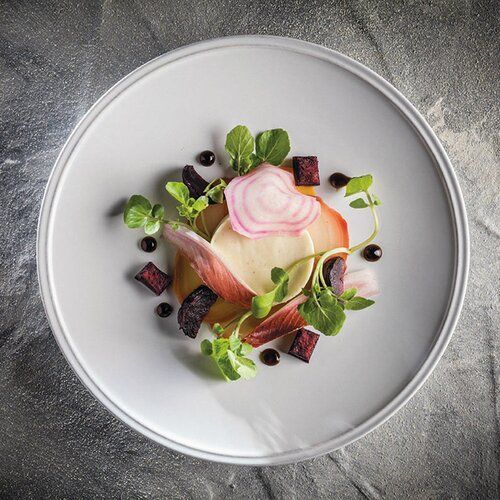
3. Geometric Patterns
Description: Geometric patterns offer a modern and artistic approach to plating, transforming your dish into a work of art.
Steps:
Cut ingredients into uniform shapes (e.g., squares, circles, triangles).
Arrange these shapes in a deliberate pattern, such as a grid or radial design.
Use sauces or drizzles to accentuate the geometric arrangement.
Tip: Precision is key. Consistent shapes and careful placement make this style pop.
4. Organic Flow
Description: An organic flow arrangement mimics the natural movement and flow of ingredients, creating a more relaxed and fluid presentation.
Steps:
Start with a central element and build outwards, allowing ingredients to flow naturally.
Use curving lines and asymmetrical placements to create a sense of movement.
Add height with stacked or layered elements to enhance the dynamic appearance.
Tip: Think of how ingredients might naturally fall or spread across the plate.
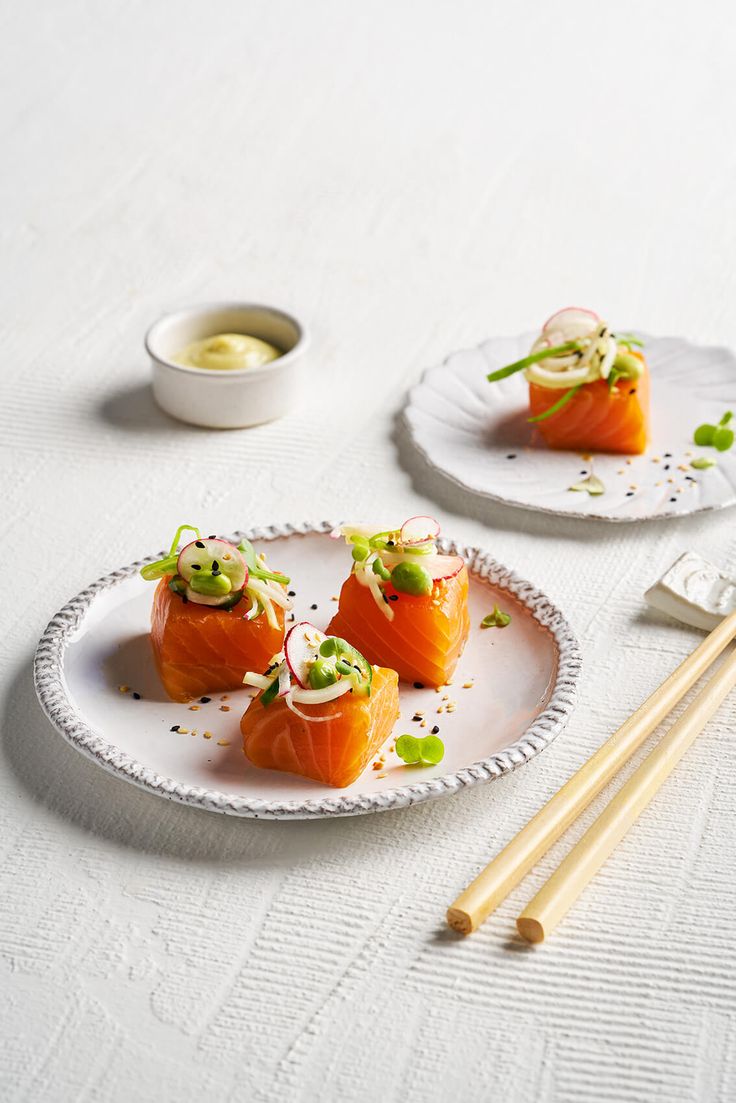
5. Color Contrast
Description: Utilize vibrant colors to create a striking contrast against the white ceramic, making the dish visually appealing.
Steps:
Select ingredients with bold, contrasting colors (e.g., red beets, green herbs, orange carrots).
Arrange these ingredients to highlight their color differences.
Use a neutral base, like white or pale elements, to make the colors stand out.
Tip: Avoid overcrowding the plate; allow the colors to breathe and stand out.
6. Deconstructed Elements
Description: Deconstructing a dish involves separating its components and arranging them individually on the plate for a modern and sophisticated presentation.
Steps:
Identify the key components of your dish (e.g., protein, vegetables, sauces).
Plate each component separately, giving each its own space.
Use garnishes and sauces to tie the elements together visually.
Tip: Ensure each component is easily identifiable yet part of a cohesive whole.


